
The Business Impact of MTTR: What’s Really at Stake
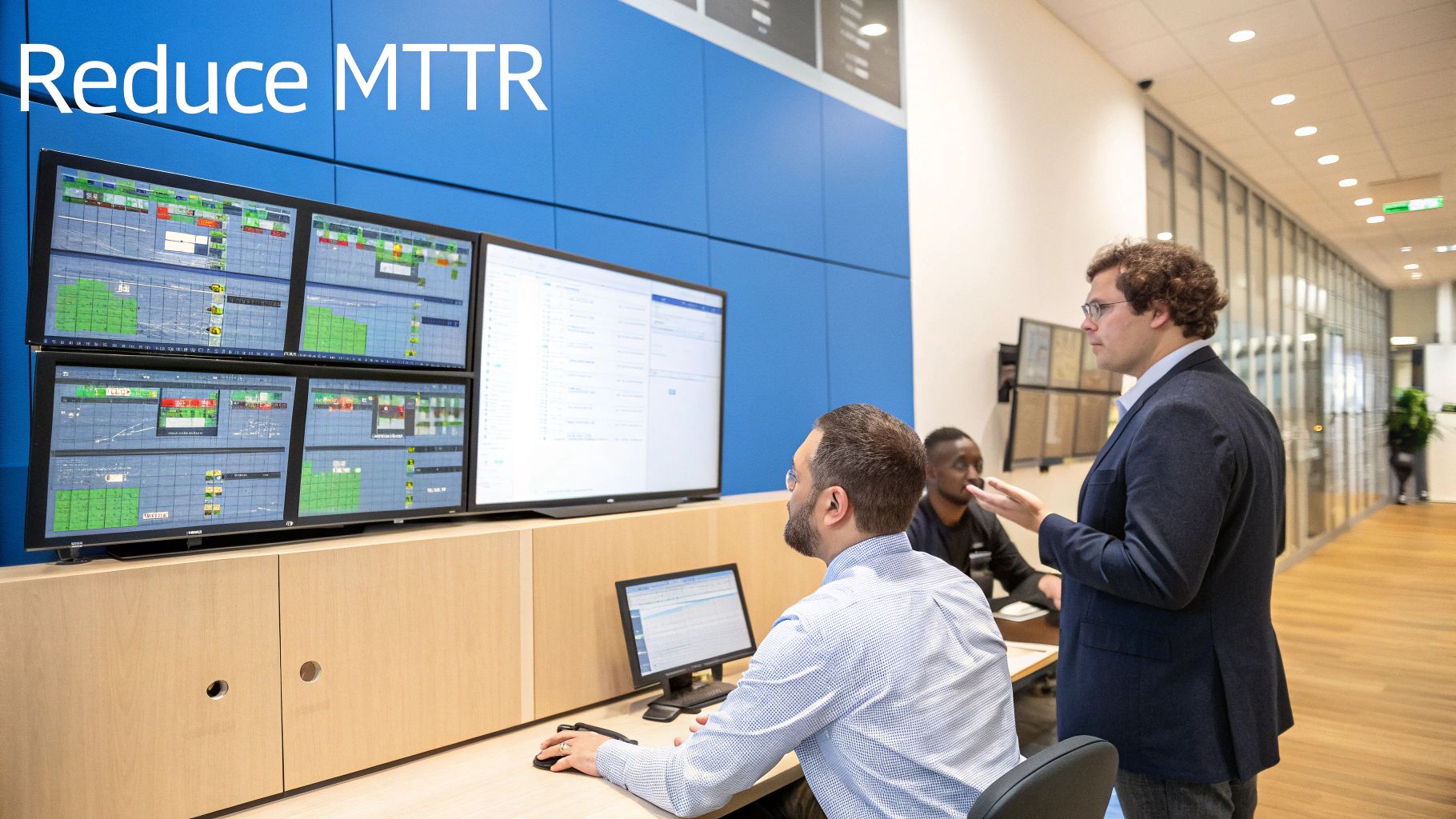
Downtime. It’s a word that can cause stress for IT professionals and business leaders. Beyond the immediate frustration, what’s the true cost of system outages? This is where Mean Time to Repair (MTTR) becomes important. MTTR is more than just a metric; it directly reflects the resilience of your business.
A high MTTR means prolonged service disruptions. This impacts customers, your team, and your bottom line. Imagine an e-commerce site experiencing an outage during peak sales. Every minute of downtime equals lost revenue, frustrated customers, and potential brand damage.
The Ripple Effect of High MTTR
The consequences of a high MTTR can affect various parts of your business:
-
Customer Dissatisfaction: Extended downtime creates negative customer experiences, potentially driving customers to competitors. This loss of trust can be hard to recover.
-
Lost Revenue: Downtime directly impacts revenue, especially for businesses reliant on online transactions or real-time services.
-
Damaged Reputation: Frequent or long outages can damage your brand’s image and impact future business.
-
Reduced Team Morale: A high MTTR puts pressure on IT and support teams. This can lead to burnout. Instead of focusing on improvements, they are constantly putting out fires.
-
Increased Operational Costs: The longer an issue takes to resolve, the higher the costs. This includes labor, resources, and potential customer compensation.
Even small MTTR improvements can have big benefits. Lowering MTTR directly impacts operational costs and service reliability. One report showed that many enterprises struggle to reduce outage rates. This often leads to significant financial losses. Learn more about the impact of MTTR here.
Reducing MTTR minimizes these losses and improves customer satisfaction. It does this by ensuring fewer service disruptions. For example, reducing MTTR from 24 hours to 6 hours increases system availability. This can lead to more revenue and customer trust. Optimizing MTTR is crucial for financial stability and maintaining a competitive edge.
Reducing MTTR isn’t just about fixing problems quickly. It’s about building a more resilient and profitable business.
Monitoring Tools That Actually Reduce MTTR
Effective incident management is crucial for minimizing Mean Time To Resolution (MTTR). A key aspect of this involves using the right monitoring tools. These tools help detect issues early, allowing organizations to address problems before they impact users. This proactive approach significantly reduces downtime and associated costs. For example, real-time analytics and targeted alerts can significantly speed up issue identification and resolution, streamlining the incident response process.
Leveraging these tools also helps accurately measure key performance indicators (KPIs). These KPIs might include metrics like server load, memory usage, storage capacity, response times, and error rates. This data-driven approach aids in faster diagnosis and resolution. Organizations integrating such monitoring technologies have reported substantial MTTR improvements, highlighting the value of early detection. Discover more insights about reducing MTTR here.
Key Features to Look For
Choosing the right monitoring tools can be the difference between a quick fix and a prolonged outage. What features truly matter when it comes to reducing MTTR? Here are some essential capabilities to consider:
-
Real-Time Monitoring: This provides immediate visibility into system performance, allowing you to identify and address issues as they happen.
-
Automated Alerting: Automated alerts notify the right teams instantly when critical thresholds are breached, ensuring a swift response.
-
Performance Baselining: Establishing baselines helps detect deviations from normal behavior, quickly highlighting anomalies.
-
Integration with Incident Management Systems: Seamless integration with tools like PagerDuty allows for automated incident creation and tracking, streamlining the workflow.
-
Root Cause Analysis Tools: Tools that pinpoint the root cause of issues save valuable time during the diagnostic process, leading to faster resolution.
Choosing the Right Tools for the Job
Different system types demand different monitoring approaches. A one-size-fits-all solution rarely works. To illustrate, let’s look at a breakdown of essential monitoring parameters by system type. The following table provides a quick overview of what to monitor and why.
To help clarify the best monitoring practices for various systems, the table below outlines key parameters, alert thresholds, and how they affect MTTR.
Essential Monitoring Parameters by System Type
| System Type | Critical Parameters | Alert Thresholds | MTTR Impact |
|---|---|---|---|
| Web Applications | Response time, error rate, traffic | Slow response times, high error rates, unusual traffic spikes | Directly impacts user experience and revenue |
| Databases | Query performance, storage usage | Slow queries, low disk space | Can lead to application slowdowns or complete outages |
| Infrastructure | CPU usage, memory usage, network latency | High CPU utilization, memory exhaustion, high latency | Impacts the performance of all dependent systems |
As you can see, aligning your monitoring strategy to the specific needs of your systems maximizes its impact on MTTR. This focused approach allows you to pinpoint the most critical metrics and set appropriate alert thresholds.
From Reactive to Proactive: Transforming Incident Response
Traditionally, monitoring was primarily reactive. Teams would wait for user reports or noticeable performance degradation before investigating. Modern monitoring solutions empower you to move from a reactive to a proactive stance. This shift focuses on detecting issues before they impact users, significantly reducing MTTR.
Tools like synthetic monitoring, user journey tracking, and infrastructure visualization are increasingly being adopted. Leading organizations use these tools to quickly pinpoint root causes. These proactive approaches help identify potential problems early, ensuring a more resilient and responsive system.
Incident Response Frameworks That Slash Resolution Times

A disorganized incident response often leads to a high Mean Time To Resolution (MTTR). When systems fail, a chaotic scramble only makes the downtime longer. This is why a robust incident response framework is so important. These frameworks provide structure, reducing confusion and enabling a faster, more coordinated response.
The Importance of Severity Classifications
Clear severity classifications are key to any effective framework. This system lets teams prioritize incidents based on impact. A complete system outage, for instance, might be a “Severity 1” incident. This triggers an immediate, all-hands response.
A minor UI glitch, on the other hand, would have a lower severity. This allows for a more measured, less urgent approach. This prioritization ensures efficient resource allocation, focusing efforts where they have the most impact.
It also prevents overreacting to small issues while guaranteeing that critical incidents get immediate attention. This targeted strategy is essential for lowering MTTR.
Runbooks: Your Go-To Guides for Incident Response
Runbooks, sometimes called playbooks, are another crucial element. These are step-by-step guides for handling specific incidents. A well-designed runbook gives clear instructions, empowering even junior team members to take effective action.
Runbooks reduce the need for improvisation during stressful situations, accelerating the resolution process. This organized approach improves consistency and reduces the chance of errors during incident response.
Communication Protocols: Keeping Everyone Informed
Effective communication is crucial during incidents. It’s a delicate balance, though. You need to keep stakeholders informed but avoid distracting the technical team. Establish clear communication protocols defining who says what, to whom, and how often.
This might involve dedicated communication channels, regular updates, and defined roles for internal and external communication. A dedicated Slack channel or status page can provide updates without constantly interrupting the team working on the fix. Enhance monitoring with tools like Call Quality Monitoring Tools. This structured approach minimizes confusion and keeps everyone informed without hindering the resolution process.
Incident Command Systems: Establishing Clear Ownership
Incident Command Systems (ICS) create a structured hierarchy for managing incidents. They clearly define roles and responsibilities, ensuring clear ownership of each resolution step. This eliminates duplicate work, streamlines communication, and speeds up decision-making. This focused approach is especially valuable for complex incidents involving multiple teams.
Reducing MTTR also hinges on improving maintenance. Standardizing repairs and improving troubleshooting significantly reduces resolution times. Documenting procedures, creating checklists, and providing training are vital for consistent and efficient repairs. Integrating technologies like AI and automation can further streamline incident response, leading to lower MTTR and better uptime. Explore this topic further here. You might be interested in: How to master stress testing. These combined strategies turn institutional knowledge into operational efficiency, enabling swift and effective incident resolution.
Automation Strategies That Transform Your MTTR Metrics
Automating incident management is the most impactful way to reduce Mean Time To Resolution (MTTR). This approach improves efficiency in every phase, from initial detection to final resolution. Through automation, organizations of all sizes have seen substantial improvements in their system reliability.
Shallow vs. Deep Automation: Understanding the Difference
There are various levels of automation you can implement. Shallow automation typically involves automating individual tasks, such as sending alerts or restarting services. While these automated tasks are helpful, they often only address surface-level problems.
Deep automation, on the other hand, focuses on automating entire workflows and processes. This leads to much more significant MTTR reductions. For example, deep automation might involve automatically diagnosing the root cause of an incident and then applying a pre-defined fix.
Self-Healing Systems: Resolving Issues Before They Escalate
One of the most effective strategies involves building self-healing systems. These systems automatically detect and resolve common issues without human intervention. Think of them as an immune system for your infrastructure, constantly addressing minor issues before they escalate into major problems. This proactive approach dramatically reduces MTTR by preventing many incidents from ever impacting users.
Automating Key Processes for Maximum Impact
Some processes offer the greatest MTTR reduction when automated. These include:
- Alerting and Notification: Automate alerts to immediately notify the right teams about emerging issues. This reduces the crucial time it takes to begin working on a solution.
- Diagnosis and Root Cause Analysis: Automated diagnostic tools can quickly identify the root cause of an incident, saving valuable troubleshooting time. Tools like Prometheus can be instrumental in this process.
- Remediation and Recovery: Automating recovery steps, like restarting services or rolling back deployments, ensures a fast return to normal operations.
ChatOps Workflows: Bringing Context to Responders
ChatOps integrates communication tools directly into the incident management workflow. This brings important context, such as alerts and runbook suggestions, directly into the team’s chat platform.
Imagine a Slack channel where alerts trigger automated responses, allowing teams to collaborate and resolve incidents within their primary communication hub. This streamlined approach speeds up communication and reduces time spent switching between different applications. Learn more in our article about How to master automating API tests.
Rollback Mechanisms: Minimizing the Impact Scope
Automated rollback mechanisms are crucial for minimizing the impact of failed deployments or configuration changes. These systems can quickly revert to a previous stable state, reducing the duration of outages and containing the impact of problems.
Anomaly Response Playbooks: Automating Actionable Steps
Creating anomaly response playbooks that execute automatically is another powerful automation strategy. These playbooks define specific actions to take when particular anomalies are detected. This automated approach ensures a consistent and efficient response, reducing the time required to resolve problems. By automating these processes, you create a more proactive incident response strategy and boost the reliability of your services.
The Evolution of MTTR Reduction: Lessons From the Front Lines

The journey of minimizing Mean Time To Resolution (MTTR) mirrors the significant transformation in IT operations. Early system administrators relied heavily on manual troubleshooting, spending countless hours isolating issues. Today, automated monitoring systems significantly expedite this process.
From Reactive to Proactive: A Shift in Mindset
Initially, MTTR reduction was a reactive endeavor. Teams scrambled to fix problems only after they occurred. This inefficient “break-fix” model often resulted in prolonged downtime.
The shift towards proactive measures, like preventative maintenance and enhanced monitoring, marked a turning point. This approach reduced incident frequency and accelerated recovery times.
Historically, minimizing MTTR has been a significant challenge in sectors like IT and manufacturing, where unplanned downtime translates to substantial financial losses. The 1991 adoption of passive backplane architecture in computer systems, designed to boost component reliability, aimed to reduce MTTR to under 10 minutes. This exemplifies the constant push for system design innovation to improve maintenance efficiency. Explore this topic further here. Technological advancements and proactive strategies have dramatically reduced MTTR, leading to improved system availability and reliability.
The Role of Automation and Emerging Technologies
Automation is now crucial for modern MTTR strategies. Automated monitoring tools can detect and address issues before they escalate, often preventing outages altogether—a significant improvement over manually checking system logs.
Chaos Engineering, a technique where systems are intentionally disrupted to test their resilience, provides further insight into system behavior under stress. This helps identify vulnerabilities and improve overall reliability, further reducing MTTR.
Lessons Learned: What Works and What Doesn’t
Not every new tool delivers on its promise of MTTR reduction. Some complex tools, while powerful, can introduce more overhead than they eliminate, hindering troubleshooting during critical incidents.
The key takeaway? Simplicity. Choose tools that streamline incident response. GoReplay, for example, simplifies error reproduction and fixing by capturing and replaying traffic.
Effective MTTR reduction hinges on simple processes, clear communication, and empowered teams. Fostering a culture of continuous improvement, where teams learn from each incident, is vital for sustained progress. This shared knowledge and analysis of past incidents refines processes and contributes to ongoing MTTR reduction.
To illustrate the evolution of MTTR reduction techniques, the following table provides a comparison across different decades:
MTTR Reduction Techniques Across Decades
This comparison shows how MTTR reduction approaches have evolved from manual processes to advanced automated solutions.
| Era | Primary Techniques | Average MTTR | Limitations | Key Innovations |
|---|---|---|---|---|
| 1990s | Manual troubleshooting, basic monitoring tools, passive backplane architecture | Hours to days | Slow problem identification, reactive approach, limited visibility | Passive backplane architecture, early monitoring systems |
| 2000s | Improved monitoring tools, early automation scripts, redundant hardware | Hours | Reliance on manual intervention for complex issues, limited automation | Enhanced monitoring, introduction of automation |
| 2010s - Present | Advanced monitoring and alerting systems, automated root cause analysis, Chaos Engineering, cloud-based infrastructure, tools like GoReplay | Minutes to hours | Complexity of some tools, need for skilled personnel | Cloud computing, AI-powered diagnostics, Chaos Engineering, advanced automation |
This table highlights the significant shift from reactive, manual processes to proactive, automated solutions. As technology advanced, so did the ability to identify and resolve issues more quickly, resulting in a dramatic decrease in average MTTR. The ongoing focus on automation and proactive measures continues to drive further improvements in MTTR, leading to greater system reliability and efficiency.
Building a Culture That Continuously Reduces MTTR
Technical solutions are crucial for reducing Mean Time To Resolution (MTTR), but they’re only part of the equation. To truly and consistently lower MTTR, a cultural shift is essential within the organization. Forward-thinking organizations recognize this and prioritize building teams that not only react effectively to incidents but also continually enhance their skills and processes.
Blameless Postmortems: Learning From Mistakes
A cornerstone of this culture is the practice of blameless postmortems. These reviews focus on why an issue occurred, not who caused it. By analyzing systemic weaknesses rather than individual errors, blameless postmortems foster open communication and identify underlying problems that contribute to downtime. This creates an environment of learning and ongoing improvement.
Targeted Training: Building Troubleshooting Skills
Investing in targeted training is also key. These programs should build practical troubleshooting skills and develop automatic responses for common incident procedures. Regular practice drills and simulations can refine team responses and improve their ability to react quickly and efficiently under pressure. This proactive approach minimizes errors during critical incidents and helps maintain a low MTTR.
Knowledge Sharing: Distributing Expertise
Building a knowledge-sharing culture is another important factor. This means establishing systems and practices that encourage teams to document and share their expertise. Consider creating an internal knowledge base that holds lessons learned from past incidents, offering valuable insights for future troubleshooting. This shared knowledge base distributes expertise throughout the organization, empowering everyone to contribute to faster resolution times.
Recognizing and Incentivizing Success
Recognizing and rewarding teams who successfully reduce MTTR reinforces positive behaviors. This might involve highlighting achievements in team meetings, awarding bonuses, or providing opportunities for professional development. Positive reinforcement motivates teams to strive for continuous improvement and makes MTTR reduction a shared organizational objective.
Overcoming Resistance to Change
Implementing new methodologies often encounters resistance. Open communication and clear explanations of the benefits of new approaches can help overcome this. Showing how these changes improve system stability and reduce downtime can persuade even skeptical team members.
Fostering Psychological Safety: Encouraging Open Dialogue
Finally, fostering a culture of psychological safety is paramount. Team members must feel safe reporting problems immediately and engaging in honest discussions without fear of reprisal. This open communication is essential for identifying and resolving issues quickly, directly contributing to a lower MTTR. Trust and openness facilitate fast information flow and a more efficient and effective incident response. Ultimately, a culture that embraces continuous improvement is just as important as technical solutions for reducing MTTR and building a more resilient organization.
Beyond MTTR: The Complete Reliability Measurement Toolkit

While minimizing Mean Time To Resolution (MTTR) is crucial, it shouldn’t be your only focus. Concentrating solely on MTTR can have unintended consequences. For instance, prioritizing quick fixes without addressing root causes can lead to recurring issues and increased downtime. This is why a comprehensive set of reliability metrics is essential.
Expanding Your Reliability Metrics: MTBF and MTTD
A more robust strategy incorporates metrics like Mean Time Between Failures (MTBF) and Mean Time To Detect (MTTD). MTBF measures the average time between system failures. A higher MTBF generally indicates greater system stability.
MTTD, conversely, measures the time it takes to identify a problem after it occurs. A lower MTTD allows for quicker responses, minimizing the problem’s overall impact. These metrics work in tandem.
A high MTBF paired with low MTTD and MTTR signifies a highly reliable system. However, a low MTBF, even with rapid detection and repair, will still result in frequent disruptions. This underscores the importance of a balanced approach.
The Importance of Customer-Centric Metrics
Traditional metrics like MTTR often focus on the technical aspects of reliability. However, the ultimate goal is a seamless user experience. This is why customer-centric metrics are essential.
Consider measuring factors like error rates, customer support ticket volume, and social media sentiment surrounding service disruptions. These provide direct insights into the impact of downtime on your users.
Setting Meaningful Baselines and Targets
Establishing meaningful baselines is key to improvement. Analyze historical data to understand your current performance across each metric. Then, set progressive improvement targets based on these baselines. This allows you to track progress and pinpoint areas for improvement.
Communicating the Business Impact
Reliability enhancements directly impact the bottom line. Communicate these impacts to stakeholders clearly and concisely. For example, explain how reducing MTTR by a specific percentage translates to reduced customer churn or increased revenue.
Visualizing Reliability Metrics
Visualizing metrics through dashboards makes them easier to understand and act upon. Use charts and graphs to highlight trends, spot anomalies, and communicate progress.
This shared visibility encourages collaborative problem-solving across teams. It ensures everyone works toward common reliability goals. Visualizations can also reveal patterns and correlations between different metrics, offering valuable insights for strategy optimization.
By adopting these principles, you can move beyond simply reducing MTTR and cultivate a culture of continuous reliability improvement. This holistic approach leads to systems that are not only rapidly repaired but also inherently more stable and resilient, ultimately benefiting both the user experience and the bottom line.
Ready to improve your system’s reliability and significantly reduce your MTTR? GoReplay can help. Capture and replay live traffic to identify and fix errors before they impact your users. Visit GoReplay today to learn more.