
Why Performance Testing Skills Are Defining Modern QA Careers

Application performance directly impacts business success by shaping how users experience and interact with products. Poor performance can drive away customers and damage brand reputation. This reality has created strong demand for skilled performance testers, making performance testing expertise one of the most sought-after qualifications in quality assurance.
The business impact of performance issues is substantial. For instance, Amazon discovered that just a one-second delay in page load time could cost billions in annual revenue. Numbers like these explain why companies invest heavily in performance testing and actively recruit specialists who can prevent such losses. Learn more about performance testing requirements.
The Evolving Role of the Performance Tester
Performance testing has grown far beyond running basic load tests. Modern performance testers work closely with development teams to build scalable applications from the ground up. They analyze complex systems, identify potential bottlenecks, and ensure applications perform reliably under real-world conditions. This expanded scope means interviews now probe deeper into candidates’ technical abilities and problem-solving approaches.
Key Skills for Modern Performance Testers
Today’s performance testers need a well-rounded skill set that includes:
- Performance Testing Methods: Strong command of load testing, stress testing, and endurance testing techniques
- Testing Tools: Practical experience with industry tools like JMeter, LoadRunner, and GoReplay
- Analysis and Optimization: Ability to find performance bottlenecks and implement effective solutions
Acing the Interview: What Employers Look For
Employers seek candidates who can tackle real-world performance challenges head-on. During interviews, you’ll need to demonstrate how you’ve solved specific performance problems and worked with various testing tools. Be ready to explain your testing approach, discuss key metrics, and show how your work improved application performance. Clear communication about technical concepts and their business impact is essential - employers want testers who can explain complex issues in simple terms to both technical and non-technical stakeholders.
Essential Performance Testing Concepts Every Candidate Must Master

Every performance tester needs to master core testing concepts before diving into tools and techniques. These fundamentals help you understand why and how systems behave under load. With a solid grasp of these concepts, you’ll be better prepared to tackle interview questions and real-world testing challenges.
Key Performance Indicators (KPIs)
Performance testers use KPIs to measure how well systems perform under different conditions. The three most important metrics are response time, throughput, and error rate. Response time shows how quickly your system handles requests, throughput reveals how many transactions it can process per unit time, and error rate tells you how often things go wrong. Together, these numbers help you spot problems and track improvements as you optimize the system.
Understanding Load Testing vs. Stress Testing
When it comes to performance testing types, load testing and stress testing serve different but equally important purposes. Load testing checks if your system can handle its expected daily workload - like making sure an e-commerce site won’t crash during normal shopping hours. Stress testing, on the other hand, pushes the system past its limits to find breaking points and recovery patterns. For example, you might stress test to see what happens if twice as many users as normal hit your site at once. Learn more about performance testing types and check out our guide on How to master a Performance Testing Strategy.
Performance Bottlenecks and Optimization
Finding and fixing bottlenecks is a key skill for performance testers. These bottlenecks can pop up anywhere - from maxed-out memory to slow database queries. Good testers know how to use monitoring tools to find the root cause of performance issues, whether it’s insufficient hardware resources or inefficient code. Once you spot a bottleneck, you can work with developers to implement fixes and measure the improvement. For more details, read our complete guide on Performance Testing Strategy.
Demonstrating Tool Mastery in Performance Testing Interviews
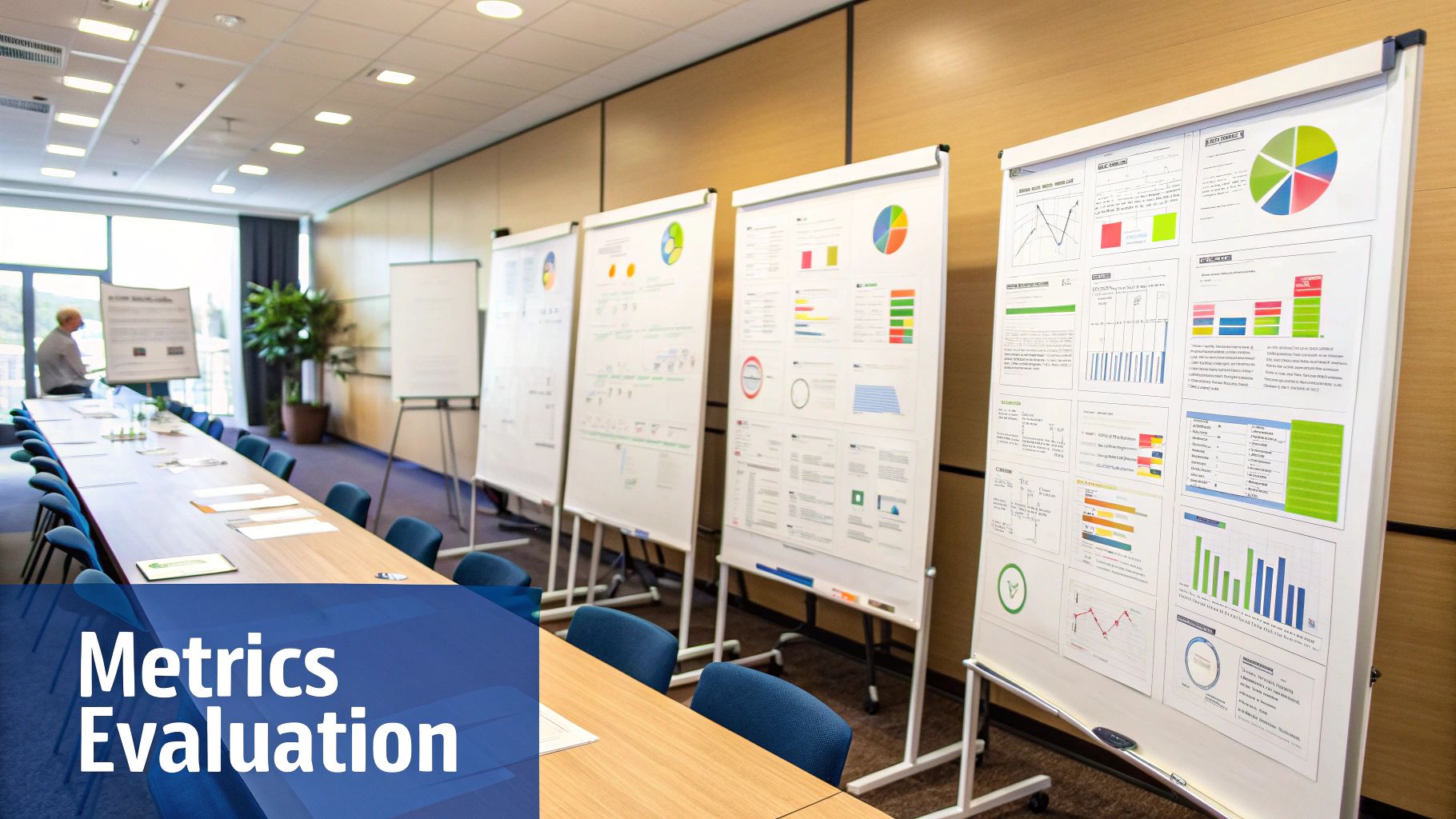
Success in performance testing interviews requires more than just theoretical knowledge - you need to show real expertise with testing tools. Let’s explore how to effectively demonstrate your hands-on experience during interviews.
Articulating Your Tool Experience
When discussing your tools experience, focus on specific examples and results rather than just listing what you know. For instance, instead of saying “I use JMeter,” share how you used it to identify a database bottleneck by simulating 500 concurrent users. This shows both technical skill and problem-solving ability.
Be ready to explain why you chose certain tools for different projects. Maybe you picked JMeter over Gatling because it better suited your specific test scenarios. These explanations show you can make smart technical decisions based on project needs.
Mastering LoadRunner Components
LoadRunner is a prime example of a tool that requires deep understanding. It’s actually several tools working together: VuGen creates test scripts, the Controller manages test execution, Load Generators simulate users, and Analysis tools interpret results. Knowing how these pieces fit together is key for effective testing. You can learn more about interview questions related to these components on GeeksForGeeks.
Showcasing Your Versatility With GoReplay and Other Tools
Being skilled with multiple tools shows adaptability and eagerness to learn. GoReplay is particularly valuable since it lets you capture and replay real production traffic. You might explain how you combined GoReplay with JMeter - using GoReplay to record actual user patterns, then JMeter to add extra load for stress testing.
Handling Tool-Specific Questions
Practice explaining technical concepts clearly using real examples from your experience. If asked about configuring a tool for a specific scenario, walk through your thought process step-by-step. For instance, describe how you used monitoring tools to track down a slow database query, resulting in a 20% faster response time.
Share concrete examples of problems you’ve solved. Maybe you noticed unusual patterns in your test results and used LoadRunner’s analysis tools to identify the root cause. These stories demonstrate both your technical skills and practical problem-solving abilities.
Mastering Real-World Performance Testing Scenarios

As a senior performance tester, being able to solve complex real-world testing challenges is a key skill that interviewers evaluate. Let’s look at how to effectively tackle these scenarios and showcase your expertise during interviews.
Analyzing Performance Bottlenecks
When faced with performance issues, having a systematic troubleshooting approach is essential. For example, if an e-commerce website slows down during peak traffic, you’ll need to methodically examine different components like database performance, server resources, and network capacity. Tools like GoReplay can help by capturing and replaying actual user traffic to identify the root cause. Walking through this process demonstrates your practical problem-solving abilities.
Developing Test Strategies That Matter
Interviewers want to see how you approach testing challenges strategically. You should be ready to outline specific test types needed (like load and stress testing), explain which metrics matter most (response times, throughput, error rates), and justify your choice of tools. The key is connecting your strategy to business goals - if the main priority is supporting concurrent users, focus on load testing and throughput metrics.
Making Technical Concepts Clear
While technical skills are crucial, being able to explain complex ideas clearly is just as important. Structure your responses logically and avoid unnecessary jargon. Instead of just stating “the database is slow,” explain specifically how database performance impacts users and why it matters. This shows you can effectively communicate with both technical and business stakeholders.
Connecting Technical Solutions to Business Value
Strong candidates show they understand both the technical and business sides of performance testing. When discussing solutions, highlight the business impact. If you find a bottleneck hurting conversion rates, estimate the potential revenue impact. This demonstrates you can prioritize issues based on their effect on the business.
Example Scenario: Slow Response Times During Peak Hours
Here’s how to handle a question about an e-commerce site experiencing slowdowns during peak periods:
- Find the root cause: Check database performance, server resources, and network capacity
- Plan your testing: Use tools like JMeter or GoReplay to recreate peak traffic conditions
- Propose specific fixes: Suggest database query optimization, resource scaling, or caching improvements
- Show business impact: Calculate potential lost sales from slow performance and demonstrate ROI of proposed solutions
By mastering these areas, you’ll be well-prepared to handle real-world scenarios in interviews. This approach shows you have both the technical skills and business understanding that companies need in senior performance testers.
Crafting Winning Test Strategy Responses
Success in performance testing interviews comes down to showing you can build practical, business-focused test plans. Beyond technical skills, you need to demonstrate how you approach testing strategically. Here’s how to structure your responses to highlight your strategic thinking abilities.
Defining Clear Objectives and Success Criteria
Start by connecting testing plans to concrete business needs. When a company needs to support 10,000 concurrent users during a major launch, your strategy should focus on replicating those exact conditions. Set specific success metrics like maximum acceptable page load times and error rates that map directly to business requirements.
Test Environment Considerations
A test environment needs to match production as closely as possible. This means using similar hardware specs, software versions, and network settings. Testing on weaker hardware can hide problems that will surface when real users hit your system. Get more insights here: How to master test strategy for Performance Testing.
Data Requirements and Management
Good test data makes or breaks performance testing. Using anonymized production data gives the most realistic results. When that’s not an option, explain your process for creating test data that accurately represents real usage patterns. This shows you understand how data quality impacts test validity.
Methodology Selection and Justification
Match your testing approach to project needs. Explain specific scenarios where load testing makes more sense than stress testing, or vice versa. Show how you pick tools like JMeter, LoadRunner, or GoReplay based on each project’s unique requirements.
Risk Management and Mitigation
Address risks head-on in your strategy. Third-party services often become bottlenecks, so outline how you test external dependencies and prepare backup plans. Share examples of how you’ve spotted and solved similar challenges in past projects.
Communicating Your Strategy Effectively
Tell a clear story about your testing approach. Use real examples from your experience, like catching a major performance issue before a product launch. Walk through your thought process and explain how you adapted your strategy based on what you learned. This shows you can both plan and execute successful performance testing programs.
Future-Proofing Your Performance Testing Expertise
Performance testing demands staying up-to-date with changes in technology and user needs. Strong performance testers develop a deep understanding of both current testing methods and emerging approaches. During interviews, show how you adapt your testing strategies to handle new challenges.
Testing in Cloud Environments
As more companies move to cloud platforms, testing strategies must evolve. Cloud environments demand expertise in distributed testing, scalability validation, and monitoring across services. You should be ready to discuss real examples of cloud testing - like using GoReplay to record and replay actual user traffic against cloud applications to verify performance at scale.
Testing Microservices
Microservice architectures bring unique testing challenges. Since each service can fail independently, you need to test both individual components and their interactions. In interviews, share specific examples of how you’ve tested microservice performance - perhaps using service mocks to isolate bottlenecks or implementing contract tests between services. Walk through your process for tracking down issues across multiple services.
Performance Optimization Skills
Effective performance testing identifies not just problems but solutions. Be ready to discuss techniques like smart caching, CDN implementation, and database tuning. Share real examples of how you’ve applied these approaches to speed up applications. Focus on practical optimization strategies that delivered measurable improvements.
Continuous Learning Mindset
Great performance testers never stop learning. Stay current by reading technical blogs, taking online courses, and contributing to open source projects. During interviews, share specific examples of new testing approaches you’ve recently learned and applied. This shows you’re committed to growing your skills.
Want to improve your performance testing? Try GoReplay to capture real production traffic and test your applications under realistic conditions. Download it today to start uncovering performance issues before they impact users.