
Level Up Your Regression Testing Game
Regression testing is critical for software quality but can consume valuable resources. This listicle presents eight best practices to optimize your regression testing efforts for faster, more efficient bug detection and higher-quality releases. Learn how to implement risk-based testing, automate test suites, strategically select and prioritize tests, incorporate continuous and visual regression testing, and leverage session-based and canary testing approaches. These techniques will help your team deliver robust software while minimizing testing overhead.
1. Risk-Based Regression Testing
Regression testing, the process of retesting software after modifications to ensure that changes haven’t introduced new defects or negatively impacted existing functionality, can be a time-consuming and resource-intensive endeavor. Risk-based regression testing offers a smarter approach by prioritizing test cases based on their potential impact on the system and the likelihood of failure. This method focuses testing efforts on the areas most likely to be affected by recent changes or those with the highest business impact if they malfunction, maximizing efficiency and ensuring the most critical functionalities are thoroughly validated. Instead of blindly running all existing test cases, teams strategically select those that address the highest risks.

This approach involves a systematic process: identifying critical functionalities, evaluating the potential business impact of failures in those areas (e.g., financial loss, reputational damage, legal implications), and assigning risk levels based on likelihood and impact. Weighted risk assessment metrics are often employed, using factors such as code complexity, change frequency, and dependency on other modules. This allows teams to focus testing resources on high-risk areas first, optimizing test coverage and ensuring that the most critical aspects of the software are thoroughly validated. Regular reassessment of risk is crucial, as the application evolves and new functionalities are added or modified.
Features of Risk-Based Regression Testing:
- Prioritization based on business criticality and technical risk: This balances business needs with technical considerations.
- Weighted risk assessment metrics: Provides a structured and quantifiable approach to risk evaluation.
- Focused testing on high-impact areas: Ensures that critical areas receive the most attention.
- Optimization of testing resources: Maximizes efficiency by avoiding unnecessary testing.
- Regular risk reassessment: Keeps the testing strategy aligned with the evolving application landscape.
Pros:
- Optimizes testing time and resources, allowing faster release cycles.
- Ensures critical functionality is tested thoroughly, minimizing the risk of major defects.
- Improves testing ROI by focusing on high-value areas.
- Enables data-driven release decisions based on quantified risk.
- Scalable for large and complex applications.
Cons:
- Requires expertise to accurately assess risk. Inaccurate assessments can lead to missed defects.
- May miss defects in areas assessed as low risk.
- Initial risk assessment can be time-consuming, requiring careful planning and stakeholder input.
- Needs regular reassessment as the application evolves, adding overhead to the testing process.
Examples of Successful Implementation:
- Microsoft: Employs risk-based regression testing for its Office suite, focusing on core functionalities across various platforms.
- JPMorgan Chase: Implemented risk-based regression for their banking applications, prioritizing security and transaction-related features.
- Oracle: Utilizes weighted risk matrices to determine test case priority for their database products.
Tips for Implementing Risk-Based Regression Testing:
- Develop a clear risk assessment framework: Involve stakeholders from different departments to gain a comprehensive understanding of business priorities and technical complexities.
- Use historical defect data: Past defect trends can provide valuable insights into potential risk areas.
- Document the reasoning behind risk assignments: This ensures transparency and facilitates future reviews.
- Regularly review and update risk assessments: Keep the risk profile aligned with the evolving application.
- Combine with test automation: Automate the execution of high-priority test cases for optimal coverage and faster feedback.
Why Risk-Based Regression Testing Deserves its Place in the List:
In today’s fast-paced software development environment, where rapid releases and continuous integration are the norm, efficient and effective testing is paramount. Risk-based regression testing provides a practical and scalable approach to address this challenge. By focusing on the areas of greatest risk, it optimizes testing efforts, reduces costs, and ultimately improves software quality and reduces the likelihood of critical production issues. This methodology, popularized by organizations like the ISTQB and experts like James Bach and Cem Kaner, is a crucial best practice for any serious software development team.
2. Automated Regression Test Suites
Regression testing is a critical part of the software development lifecycle, ensuring that new code changes haven’t introduced bugs or broken existing functionality. Automated regression test suites are the cornerstone of efficient and effective regression testing. This approach involves creating and maintaining a suite of automated tests that can be run repeatedly to verify that software changes haven’t adversely affected existing features. Leveraging test automation frameworks allows these regression tests to be executed consistently and frequently, enabling teams to identify and address issues early in the development process, ultimately ensuring higher software quality.

Automated regression test suites offer a powerful set of features including seamless continuous integration, parameterized testing for diverse scenarios, cross-browser and cross-platform execution for comprehensive coverage, detailed reporting and analytics for actionable insights, parallel test execution for speed and efficiency, and even scriptless test automation options for broader team participation. This makes them invaluable for fast-paced development environments. Implementing effective automated tests is crucial for efficient regression testing. For guidance on establishing a robust automated testing strategy, refer to these automated testing best practices from DocuWriter.ai: 10 Automated Testing Best Practices: The Modern Guide to QA Excellence.
The benefits are substantial. Compared to manual testing, automation offers significant time savings, enabling teams to focus on more complex testing scenarios. It also ensures consistent and repeatable test execution, eliminating human error and providing faster feedback on code changes. This consistency allows for more frequent regression testing, ultimately leading to improved test coverage and faster identification of potential issues.
Industry giants like Google, Facebook, and Netflix have demonstrated the power of automated regression testing. Google, for instance, maintains over 150 million automated tests that run daily across their products, ensuring the quality and stability of their vast software ecosystem. Facebook leverages its Jest framework for automated regression testing of its JavaScript applications, while Netflix relies on a sophisticated automated testing infrastructure that runs thousands of tests before each deployment, guaranteeing a seamless streaming experience for its millions of users.
While the advantages are compelling, automated regression test suites do have some drawbacks. The initial setup and implementation can be time-consuming and costly, requiring specialized technical expertise. Ongoing maintenance is also essential as the application evolves, and poorly maintained test suites can produce false positives or negatives. Finally, it’s important to remember that not all tests are suitable for automation. Human intuition and exploratory testing still play a vital role in comprehensive quality assurance.
To maximize the effectiveness of your automated regression test suites, consider these tips:
- Follow the test automation pyramid: Prioritize unit tests, followed by integration tests, and minimize the number of UI tests for optimal efficiency.
- Design tests with maintenance in mind: Use modular and reusable code to simplify updates and reduce the impact of application changes.
- Use descriptive test names: Clearly explain the purpose of each test to improve readability and maintainability.
- Implement proper test data management: Utilize effective strategies for test data creation, storage, and retrieval to ensure test accuracy and reliability.
- Regularly refactor test code: Keep your test code clean and maintainable by refactoring it periodically to remove redundancy and improve efficiency.
- Consider test-driven development (TDD): This approach encourages writing tests before writing code, promoting a more test-centric development process.
Automated regression test suites are a crucial asset for any development team seeking to deliver high-quality software. By carefully considering the pros and cons, following best practices, and implementing effective strategies, organizations can leverage the power of automation to streamline their testing processes, accelerate development cycles, and ultimately deliver a superior product to their users.
3. Regression Test Selection
Regression Test Selection (RTS) is a crucial optimization technique in software testing that aims to significantly reduce the time and resources spent on regression testing. Instead of blindly re-executing the entire regression test suite after every code change, RTS strategically identifies and runs only the subset of tests affected by those changes. This targeted approach relies on analyzing code dependencies, understanding the impact of modifications, and leveraging test coverage data to pinpoint the tests truly necessary to validate the stability and functionality of the modified code. This ensures that new defects haven’t been introduced while dramatically optimizing the testing process.

RTS leverages several key features to achieve its objectives: code change analysis and dependency mapping to understand the ripple effects of modifications; test-to-code traceability to link tests to specific code sections; selective test execution based on the analysis; static and dynamic analysis techniques to explore code paths and behavior; and coverage-based selection algorithms to ensure adequate testing of modified areas.
This approach deserves a place in any best practices list due to its potential to drastically improve testing efficiency. By focusing resources on relevant test areas, RTS enables more frequent testing cycles and provides faster feedback to developers, which is invaluable in fast-paced development environments. This efficiency is particularly beneficial for large codebases where full regression testing can be time-consuming and resource-intensive.
Benefits and Drawbacks:
Pros:
- Dramatically reduces regression testing time: This allows for quicker release cycles and faster feedback loops.
- Enables more frequent testing cycles: Facilitates continuous integration and delivery practices.
- Focuses resources on relevant test areas: Optimizes resource utilization and avoids unnecessary testing.
- Provides faster feedback to developers: Allows for quicker identification and resolution of issues.
- Scales well with large codebases: Essential for managing complex and evolving software projects.
Cons:
- Can miss defects if dependencies are not properly mapped: Requires careful setup and maintenance of dependency information.
- Requires sophisticated tooling and technical setup: Can involve a learning curve and integration effort.
- May involve complex initial configuration: Needs careful planning and execution to ensure effectiveness.
- Less effective with highly interconnected codebases: The complexity of dependencies can hinder accurate test selection.
- Requires accurate code coverage data: Inaccurate coverage information can lead to insufficient testing.
Real-World Examples:
- Google’s Mondrian system: Selects relevant tests based on code review changes, optimizing the testing process for their massive codebase.
- Microsoft’s STARTS framework for Java applications: Provides a structured approach for selective regression testing in Java projects.
- Facebook’s Buck build system: Integrates test selection capabilities, streamlining the build and test process.
- Spotify’s test selection system: Reportedly reduced CI pipeline time by 50%, showcasing the potential for significant time savings.
Actionable Tips for Implementation:
- Combine with impact analysis tools: Enhance accuracy by understanding the broader impact of code changes.
- Validate the selection algorithm: Periodically run full regression tests to ensure comprehensive coverage and identify any gaps in the selection process.
- Maintain accurate test-to-code mapping: Keep the mapping up-to-date to ensure the correct tests are selected.
- Update dependency graphs after major refactoring: Reflect changes in code structure to maintain the accuracy of dependency information.
- Consider granularity: Implement file-level, class-level, or method-level selection based on the specific needs and complexity of the project.
When and Why to Use RTS:
RTS is particularly beneficial in agile and continuous integration/continuous delivery (CI/CD) environments where frequent code changes and rapid releases are the norm. It’s ideal for large and complex codebases where full regression testing is impractical or too time-consuming. By reducing the testing overhead, RTS enables faster feedback cycles, allowing developers to address issues promptly and maintain a high velocity of development. While the initial setup might require some effort, the long-term benefits in terms of time saved and improved testing efficiency make RTS a valuable investment for any software development team.
4. Continuous Regression Testing
Continuous Regression Testing represents a significant advancement in software quality assurance by integrating regression testing directly into the CI/CD pipeline. This means that every time a developer commits code changes, a suite of automated regression tests is triggered, verifying that the new code hasn’t introduced bugs or broken existing functionality. This immediate feedback loop is crucial for catching regressions early, preventing them from propagating to later stages of development or even making their way into production. It empowers developers to address issues while the code is still fresh in their minds, significantly reducing the time and effort required for debugging and remediation.
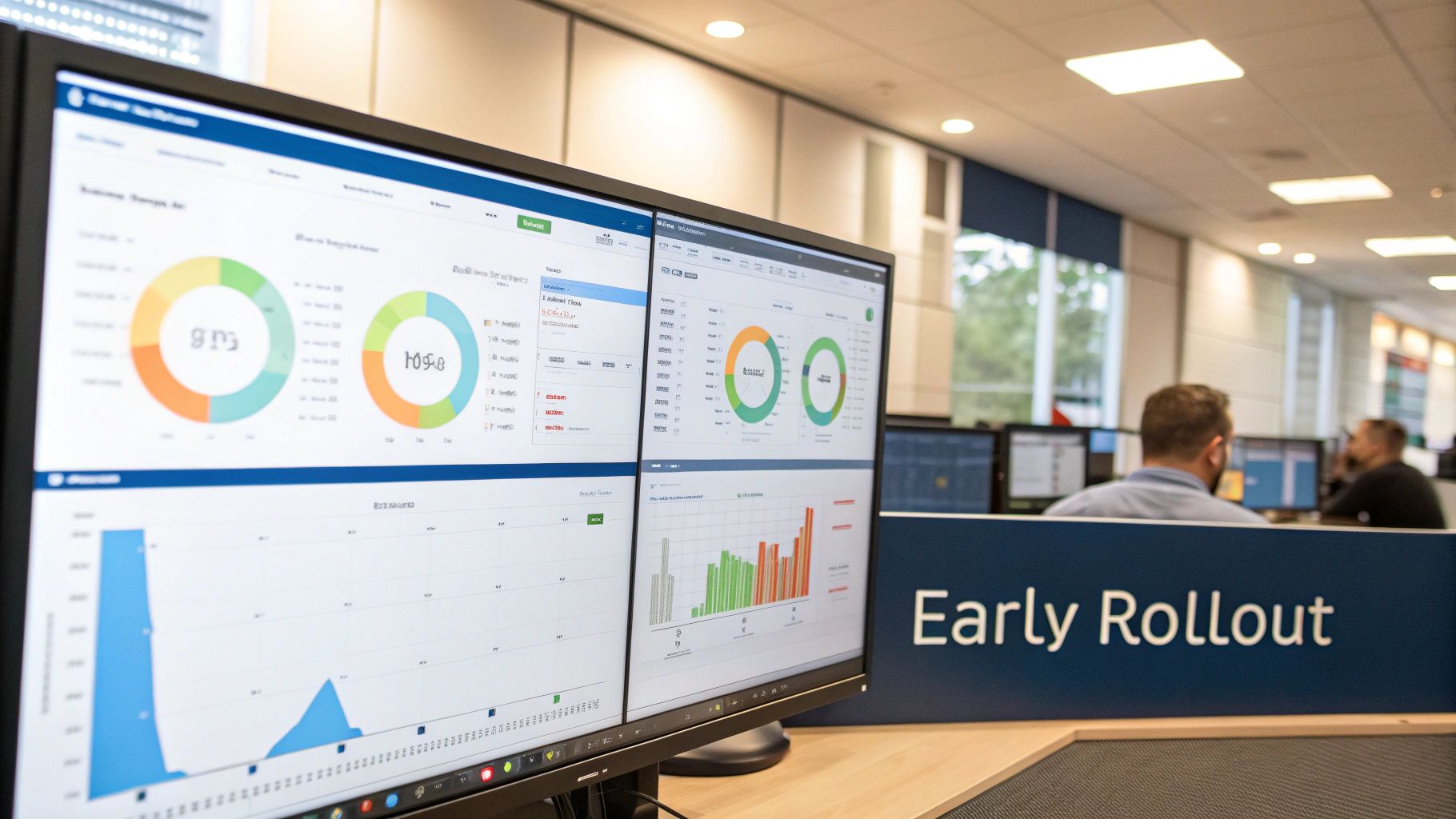
This approach is built upon key features including tight integration with CI/CD tools like Jenkins, CircleCI, and GitHub Actions; automatic test triggering upon code commits; parallel test execution for faster feedback; real-time reporting and notifications; visualization of test results and trends; and fail-fast mechanisms to halt the pipeline upon detecting critical failures. These features combine to create a robust system for ensuring software quality throughout the development lifecycle.
Companies like Amazon, Etsy, Adobe, and Twitter have successfully implemented continuous regression testing, demonstrating its effectiveness at scale. Amazon, for instance, reportedly runs over 60 million tests daily within their CI/CD pipeline, while Etsy’s system provides feedback within minutes of code changes. These examples highlight the transformative potential of continuous regression testing for accelerating development while maintaining high quality.
Pros:
- Immediately identifies regression issues: This prevents bugs from snowballing into larger, more complex problems later on.
- Prevents problematic code from reaching production: This protects the user experience and safeguards the company’s reputation.
- Reduces integration problems: By continuously verifying compatibility, it minimizes conflicts during code merges.
- Provides constant quality assurance: This instills confidence in the codebase and supports faster release cycles.
- Supports agile and DevOps practices: It aligns perfectly with the principles of continuous integration and continuous delivery.
- Encourages smaller, more manageable code changes: Developers are more inclined to commit smaller changes knowing they will be immediately tested.
Cons:
- Requires robust CI/CD infrastructure: Setting up and maintaining the necessary infrastructure can be a significant investment.
- Can slow down the build process without proper optimization: Parallel execution and efficient test suites are crucial for mitigating this.
- Needs well-maintained automated tests: The effectiveness of continuous regression testing hinges on the quality and reliability of the tests themselves.
- May generate high volumes of test data to manage: Effective reporting and analysis tools are essential.
- Initial setup can be complex: Integrating regression tests into the pipeline requires careful planning and configuration.
Tips for Effective Continuous Regression Testing:
- Implement test parallelization: This significantly reduces overall test execution time.
- Set up meaningful test failure notifications: Ensure developers receive timely and actionable alerts.
- Configure appropriate test timeouts to identify performance regressions: This helps detect subtle performance degradations.
- Maintain a balance between test coverage and execution speed: Prioritize the most critical tests to ensure fast feedback without sacrificing quality.
- Implement flaky test detection and management: Identify and address tests that produce inconsistent results.
- Create dashboards for test health monitoring: Visualize trends and identify areas for improvement.
Continuous Regression Testing deserves its place in the best practices list due to its transformative impact on software quality and development speed. By providing continuous feedback and preventing regressions from reaching production, it becomes a cornerstone of robust and efficient software development. It is particularly valuable for teams practicing agile and DevOps methodologies, where rapid iteration and continuous delivery are paramount. This method is highly recommended for any team striving to enhance their software quality while accelerating their development cycles.
5. Regression Test Prioritization
Regression Test Prioritization (RTP) is a crucial technique for optimizing regression testing efforts, especially when dealing with large and complex software systems. Instead of eliminating tests like test selection, RTP strategically orders the execution of regression tests based on criteria such as historical fault detection effectiveness, test execution time, requirements coverage, code coverage, and business criticality. This approach maximizes the chances of finding critical defects early in the testing cycle, even when time is limited. Its inclusion in this list of best practices underscores its importance in achieving efficient and effective regression testing.
RTP works by assigning priorities to individual test cases within a regression suite. Tests with higher priority are executed before those with lower priority. This allows testers to focus on the most critical areas of the application first and increases the likelihood of uncovering significant defects early in the testing process. Various algorithms and techniques are used to determine these priorities, often incorporating multiple factors simultaneously.
Features of Regression Test Prioritization:
- Severity-based test ordering: Prioritizes tests based on the severity of potential defects.
- Fault-detection history analysis: Tests that have historically uncovered more defects are given higher priority.
- Coverage-based prioritization algorithms: Prioritizes tests based on their code or requirements coverage.
- Time-aware test scheduling: Considers the execution time of tests to optimize scheduling.
- Requirements-based prioritization: Prioritizes tests based on the importance and complexity of the associated requirements.
- Customer-usage pattern analysis: Prioritizes tests based on how frequently different features are used by customers.
Benefits of Using RTP:
- Improves early defect detection rate: Running high-priority tests first increases the chances of finding critical bugs early.
- Maximizes test effectiveness under time constraints: Allows for maximum test coverage within limited timeframes.
- Provides faster feedback on critical areas: Quick feedback on high-risk areas helps expedite development and remediation.
- Balances test coverage with available resources: Optimizes resource allocation by focusing on the most important tests.
- Adapts to project deadlines and release cycles: Flexibility to adjust priorities based on project needs.
Pros and Cons:
| Pros | Cons |
|---|---|
| Improves early defect detection rate | May still require running the full test suite eventually |
| Maximizes test effectiveness under time constraints | Requires historical test data for optimal effectiveness |
| Provides faster feedback on critical areas | Complex prioritization algorithms can be difficult to implement |
| Balances test coverage with available resources | Needs regular recalibration as the application evolves |
| Adapts to project deadlines and release cycles | Can be computationally expensive for large test suites |
Examples of Successful Implementation:
- Microsoft’s Windows team: Uses test case prioritization based on customer usage data.
- Siemens: Implemented a coverage-based prioritization approach that improved defect detection by 30%.
- ABB Group: Utilizes history-based test prioritization for industrial control systems.
- Cisco: Employs severity-weighted test prioritization for network equipment firmware.
Tips for Effective Regression Test Prioritization:
- Combine multiple prioritization factors: Using a combination of factors often yields better results.
- Regularly analyze and update prioritization criteria: Ensure criteria remain relevant as the application evolves.
- Track and evaluate the effectiveness of prioritization strategies: Monitor key metrics to measure the impact of RTP.
- Use weighted scoring systems: Balance different prioritization factors based on their relative importance.
- Consider seasonal or release-specific priorities: Adjust priorities based on specific release requirements or seasonal demands.
- Implement both coarse-grained (test suite) and fine-grained (test case) prioritization: Apply prioritization at both the test suite and individual test case levels.
When and Why to Use RTP:
RTP is particularly valuable in situations where:
- Time is limited: When facing tight deadlines, RTP helps maximize the effectiveness of testing within the available time.
- Resources are constrained: RTP helps optimize resource allocation by focusing on the most important tests.
- Risk is high: Prioritizing tests based on risk factors helps mitigate potential issues early.
- The software is complex: For large and complex applications, RTP helps manage the complexity of regression testing.
By incorporating Regression Test Prioritization into your testing strategy, you can significantly improve the efficiency and effectiveness of your regression testing efforts and ensure that critical defects are identified and addressed quickly. The work of researchers like Sebastian Elbaum and Gregg Rothermel, along with contributions from organizations like Google’s Engineering Productivity team and presentations at conferences like the IEEE International Conference on Software Testing, have further popularized and solidified the importance of RTP in modern software development practices.
6. Session-Based Regression Testing
Session-Based Regression Testing offers a powerful approach to uncovering regressions by blending the structured methodology of traditional testing with the flexibility and human insight of exploratory testing. It addresses the critical need to verify that new changes haven’t negatively impacted existing functionality while acknowledging the limitations of purely automated approaches. This method deserves its place in the best practices list because it provides a practical and effective way to find subtle and unexpected regression issues that often evade automated tests.
Instead of relying solely on predefined test cases, Session-Based Regression Testing utilizes time-boxed sessions, typically lasting 60-120 minutes, with clear, focused charters. These charters guide testers to explore specific areas of the application while looking for regressions. This structured yet exploratory approach allows testers to leverage their creativity and critical thinking to identify potential problems, while the time-boxing and charters ensure focus and accountability. Testers document their findings, and a debriefing process follows each session to review results and refine subsequent sessions. This iterative process maximizes the value of each testing session and encourages continuous improvement. Learn more about Session-Based Regression Testing While the link focuses on HTTP sessions, it can offer insights into the concept of sessions in a broader context, which can be applied to understanding Session-Based Testing.
Key features of Session-Based Regression Testing include:
- Time-boxed testing sessions: Maintaining focus and maximizing efficiency.
- Focused test charters: Guiding testers and ensuring coverage of critical areas.
- Structured documentation of findings: Providing clear and actionable reports.
- Debriefing and review processes: Facilitating collaboration and knowledge sharing.
- Heuristic-based exploration: Leveraging experience and best practices.
- Blend of scripted and exploratory approaches: Balancing structure with flexibility.
Several organizations have successfully implemented Session-Based Regression Testing. Microsoft reportedly used this approach for Windows 7 regression cycles, highlighting its effectiveness even in large-scale projects. Spotify integrates session-based testing with automated testing for key user journeys, leveraging the strengths of both approaches. Shopify uses session-based regression for their commerce platform updates, and Atlassian utilizes it alongside automated regression for Jira releases, further demonstrating the practical applicability of this technique across diverse industries and applications.
Pros:
- Combines human insight with a structured methodology.
- Effective at finding unexpected regression issues.
- Adaptable to changing requirements.
- Less maintenance overhead than fully scripted tests.
- Engages testers’ creativity and critical thinking.
- Can find issues automated tests might miss.
Cons:
- Less repeatable than automated testing.
- Results depend on tester skill and experience.
- Difficult to scale across very large applications.
- Requires more tester time than automated regression.
- Not ideal for high-frequency regression testing needs.
Tips for Effective Session-Based Regression Testing:
- Create clear, focused session charters targeting high-risk areas.
- Use previous defect data to inform session planning.
- Standardize session notes format for consistency.
- Rotate testers across different areas to maintain fresh perspectives.
- Schedule regular debrief meetings to review findings and share insights.
- Use tools like screen recording software to capture issues and facilitate reporting.
- Develop a repository of common testing heuristics to guide exploratory testing efforts.
When and why should you use Session-Based Regression Testing? This approach is particularly valuable when dealing with complex systems, frequent updates, or when human insight is crucial for identifying subtle regressions. It’s a strong choice when balancing the need for thorough testing with the constraints of time and resources, and when flexibility and adaptability are paramount. While not a replacement for automated regression testing, it serves as a highly effective complement, enhancing overall regression test coverage and quality.
7. Visual Regression Testing
Visual Regression Testing (VRT) is a quality assurance technique that automatically detects unintended visual changes in a user interface (UI) by comparing screenshots taken before and after code modifications. This approach goes beyond traditional functional testing, which verifies what the application does, and focuses on how the application looks. VRT captures baseline images of UI components, entire pages, or even specific sections of a page, and then automatically compares these snapshots with new images taken after code changes. By identifying pixel-level differences, VRT ensures that UI layouts, styling, responsive behavior, and visual elements remain consistent across releases, catching subtle visual regressions that functional tests might miss.
How it Works:
VRT tools typically operate by capturing baseline screenshots of the application’s UI in a pristine state. After subsequent code changes, the tool automatically captures new screenshots of the same UI elements and compares them against the baselines. The comparison process uses sophisticated algorithms to identify differences, often highlighting the discrepancies visually. These differences can range from minor pixel variations to significant layout shifts, allowing developers to quickly pinpoint and address unintended visual changes.
Features and Benefits:
- Pixel-by-pixel comparison: Ensures even the slightest visual deviations are detected.
- Baseline image management: Provides a structured way to store and manage baseline screenshots.
- Configurable comparison thresholds: Allows customization of the sensitivity to visual differences, reducing false positives.
- Visual diff highlighting: Clearly visualizes discrepancies between baseline and current screenshots.
- Cross-browser and cross-device testing: Verifies consistent UI rendering across various browsers and devices.
- Responsive design validation: Ensures UI adapts correctly to different screen sizes and resolutions.
Pros:
- Detects UI regressions that functional tests miss: Catches subtle visual bugs that impact the user experience.
- Verifies visual consistency across releases: Maintains a consistent brand identity and user experience.
- Reduces manual visual inspection effort: Automates a time-consuming and error-prone process.
- Provides visual evidence of changes: Facilitates communication and collaboration among team members.
- Effective for design system validation: Ensures adherence to design guidelines and component consistency.
- Catches CSS and layout issues early: Identifies and resolves visual problems early in the development cycle.
Cons:
- Sensitive to minor visual variations: Can generate false positives due to anti-aliasing, font rendering, or dynamic content.
- Requires baseline management and updates: Baselines need to be updated when intentional UI changes are made.
- Can generate false positives from dynamic content: Requires careful configuration to exclude dynamic elements like timestamps or personalized content.
- May be affected by rendering differences across environments: Needs careful environment configuration to minimize inconsistencies.
- Needs configuration for acceptable variation thresholds: Fine-tuning required to balance sensitivity and practicality.
Examples of Successful Implementation:
Several organizations have successfully integrated VRT into their workflows:
- Airbnb utilizes Happo for their visual regression testing needs.
- Pinterest relies on visual testing to maintain design system consistency.
- The BBC implements BackstopJS for cross-browser visual regression.
- Walmart leverages visual testing for their e-commerce platform.
- Uber employs a visual regression system for their rider and driver apps.
Tips for Effective Visual Regression Testing:
- Exclude dynamic areas: Mask or exclude dynamic content like timestamps, user-generated content, or animated elements from comparisons.
- Implement in CI/CD pipelines: Automate VRT as part of the continuous integration and continuous delivery process.
- Use smart comparison algorithms: Leverage algorithms that understand acceptable variations and ignore minor rendering differences.
- Maintain separate baselines: Manage different baselines for various browsers, devices, and viewport sizes.
- Include responsive breakpoint testing: Validate UI appearance at key responsive breakpoints.
- Combine with component-level testing: Integrate VRT with component-level testing for design system validation.
- Consider visual testing as part of accessibility validation: Ensure UI changes do not negatively impact accessibility.
Why Visual Regression Testing Deserves Its Place in the List:
In today’s visually-driven digital landscape, maintaining a consistent and polished user interface is paramount. VRT provides a crucial layer of quality assurance, catching subtle visual defects that can negatively impact the user experience and brand perception. By automating the process of visual inspection, VRT frees up valuable time for developers and testers to focus on other critical aspects of software quality.
Popularized By: Percy.io (now Browserstack Percy), Applitools Eyes, BackstopJS, PhantomCSS, and web testing advocate Kevin Lamping.
8. Canary Regression Testing
Canary Regression Testing represents a crucial step towards minimizing the risk of deploying faulty software updates. It involves incrementally rolling out changes to a small subset of users or environments – the “canaries” – before a full deployment. By observing the impact of these changes on real production traffic and user behavior, teams can detect and address regression issues before they affect the entire user base. This approach provides an invaluable safety net, bridging the gap between pre-production testing and full-scale releases.
How it Works:
Canary testing leverages a controlled rollout strategy. A small percentage of users (typically 1-5%) are directed to the new version of the application, while the remaining users continue using the existing version. Comprehensive monitoring and analysis of key metrics – such as performance, error rates, and user behavior – are performed on this canary group. If the new version performs as expected and no regressions are detected, the rollout progressively expands to a larger user base. However, if issues are identified, automated rollback mechanisms revert the canary group back to the previous stable version, limiting the impact of the regression and allowing developers to diagnose and fix the problem.
Features of Canary Regression Testing:
- Incremental deployment to production: Enables a gradual, controlled rollout.
- Real-user traffic monitoring: Provides genuine insights into performance under real-world conditions.
- Automated rollback mechanisms: Ensures rapid recovery in case of regressions.
- Feature flagging integration: Allows selective activation of new features for the canary group.
- Performance and error rate comparison: Facilitates data-driven assessment of the new version.
- Statistical analysis of user behaviors: Helps identify subtle changes in user engagement and satisfaction.
Pros:
- Tests in actual production conditions: Unlike staging environments, canary testing validates changes against real user traffic, data, and infrastructure.
- Limits the impact of regressions: By exposing only a small subset of users to potential issues, the damage from regressions is significantly reduced.
- Provides real user feedback on changes: Offers early feedback on new features and UX updates under realistic conditions.
- Catches environment-specific issues: Identifies regressions related to specific production configurations that may not be replicated in pre-production environments.
- Enables data-driven deployment decisions: Provides concrete data to support decisions about continuing or halting the rollout.
- Reduces risk of catastrophic releases: Acts as a final checkpoint before widespread deployment, significantly minimizing the chances of a major outage.
Cons:
- Some users experience issues during testing: While the impact is limited, some users in the canary group might encounter bugs or performance issues.
- Requires sophisticated deployment infrastructure: Implementing canary testing requires tools and processes for segmented deployments, monitoring, and automated rollbacks.
- Needs robust monitoring and alerting systems: Real-time monitoring and alerts are crucial for rapid detection and response to regressions.
- More complex to implement than traditional testing: Requires more planning and infrastructure setup compared to traditional pre-production testing.
- May delay full feature rollout: The gradual rollout process can extend the overall time it takes to release a feature to all users.
Examples of Successful Implementation:
Companies like Google, Amazon, Netflix, Facebook, and Microsoft have successfully adopted canary testing practices. Google pioneered this approach for Chrome and search algorithm updates. Amazon utilizes it for e-commerce platform changes. Netflix developed Kayenta, an automated canary analysis tool for their streaming service. Facebook’s Gatekeeper system and Microsoft’s progressive experimentation approach for Office 365 further demonstrate the widespread adoption and effectiveness of canary testing.
Tips for Effective Canary Regression Testing:
- Define clear metrics and thresholds for success/failure before initiating the rollout.
- Implement automated rollback triggers based on these metrics to ensure quick recovery.
- Start with a very small percentage (1-5%) of traffic for the initial canary group.
- Use feature flags to control the exposure of new functionalities to the canary group.
- Ensure robust monitoring of both technical (e.g., performance, error rates) and business metrics (e.g., conversion rates, user engagement).
- Consider geographical or demographic targeting for initial rollouts to test the impact on specific user segments.
- Design experiments to minimize statistical noise and ensure reliable results. Learn more about Canary Regression Testing can provide further insights into these techniques.
Canary Regression Testing deserves its place in any list of best practices due to its ability to significantly reduce the risk of releasing faulty software updates. By catching regressions in a controlled, real-world environment before they impact the entire user base, this approach enables faster feedback loops, data-driven deployment decisions, and increased confidence in software releases. This ultimately leads to higher user satisfaction and reduced business disruption. Popularized by Google’s Site Reliability Engineering team, Martin Fowler’s writings on deployment techniques, and platforms like Spinnaker and LaunchDarkly, canary testing is becoming increasingly critical for delivering high-quality, reliable software in today’s fast-paced development environments.
8-Point Regression Testing Best Practices Comparison
| Technique | 🔄 Complexity | ⚡ Resources | 📊 Outcomes | 💡 Use Cases | ⭐ Advantages |
|---|---|---|---|---|---|
| Risk-Based Regression Testing | Medium – Requires expert risk assessment | Focused testing with stakeholder input | Early detection in high-risk areas | Business-critical systems, large applications | Optimizes test ROI; prioritizes critical functionalities |
| Automated Regression Test Suites | High – Demands initial setup and ongoing maintenance | Significant automation setup and technical expertise | Consistent, repeatable test execution | CI-integrated projects; frequent release cycles | Saves time; enhances test coverage; reduces human errors |
| Regression Test Selection | High – Involves sophisticated dependency analysis | Needs advanced tools and precise code mapping | Targeted test execution; reduced testing time | Large codebases; change-driven testing environments | Faster feedback; improved efficiency |
| Continuous Regression Testing | High – Complex integration with CI/CD pipelines | Robust CI/CD infrastructure and parallel execution | Real-time feedback; immediate defect identification | Agile/DevOps environments; continuous deployment cycles | Prevents integration issues; accelerates feedback |
| Regression Test Prioritization | Moderate to High – Relies on historical data analysis | Requires data collection and regular recalibration | Optimized test order; early defect detection | Time-constrained testing cycles; critical release phases | Maximizes test effectiveness; balances coverage with time |
| Session-Based Regression Testing | Moderate – Depends on tester skill and structured sessions | Requires skilled testers for exploratory analysis | Identifies unexpected issues; qualitative insights | Exploratory contexts; ad-hoc regression evaluations | Flexible and creative testing approach |
| Visual Regression Testing | Medium – Involves baseline and configuration management | Needs imaging tools and ongoing baseline updates | Detects UI inconsistencies and layout deviations | UI-heavy applications; design system validation | Catches visual discrepancies early; reduces manual inspection |
| Canary Regression Testing | High – Complex production rollout strategy | High infrastructure demands; robust monitoring systems | Real-world feedback; minimizes widespread defects | Production environments; high-stakes releases | Limits risk; leverages real user conditions |
Ready to Implement These Best Practices?
This article explored eight key best practices for effective software regression testing: risk-based testing, automated test suites, strategic test selection, continuous testing, test prioritization, session-based testing, visual regression testing, and canary regression testing. By integrating these practices into your software development lifecycle, you can significantly reduce the risk of regressions, minimize disruption to users, and maintain the overall quality of your applications. Prioritizing these strategies, and selecting the right mix for your specific project, empowers your team to deliver stable and reliable software releases while optimizing resources and accelerating time-to-market. Mastering these concepts ultimately translates to higher user satisfaction, reduced development costs, and a stronger competitive advantage.
These best practices aren’t just theoretical concepts; they are actionable steps that can transform your software development process. Start by assessing your current regression testing strategy and identify areas for improvement. Focus on implementing one or two practices at a time, gradually building a robust and comprehensive regression testing framework tailored to your needs. Remember that effective testing relies heavily on realistic test environments. Take your regression testing to the next level with GoReplay, a powerful tool that captures and replays real HTTP traffic, providing a more accurate and representative testing environment. Learn more about how GoReplay can enhance your regression testing strategy by visiting GoReplay.