
Why Regression Tests Make or Break Your Agile Success
In Agile development, change is constant. New features, bug fixes, and performance enhancements flow into the codebase continuously. This rapid development pace, while great for delivering value quickly, creates a challenge: ensuring existing functionality remains stable amidst these changes. This is where regression testing becomes essential. Regression tests in Agile are not optional; they are the safety net preventing yesterday’s working features from becoming tomorrow’s bugs.
The Importance of Preventing Regression Bugs
Imagine a finely tuned clock. Each gear, spring, and lever works in harmony. Now, add a second hand. Without careful planning, this small change could disrupt the clock’s balance, causing malfunctions. Similarly, even minor code changes can have unexpected consequences in software, affecting unrelated parts of the application. These unintended consequences are regression bugs, and they can severely impact Agile success.
Regression testing in Agile is crucial because of its iterative nature. Frequent changes and updates can introduce new bugs or break existing functionality. For example, studies show approximately 70% of Agile teams struggle to maintain test suites due to evolving requirements. Learn more about regression testing in Agile here: Regression Testing in Agile. This highlights the need for robust regression testing to ensure new code doesn’t damage existing features.
Treating Regression Testing as an Investment
Effective Agile teams understand regression testing isn’t overhead; it’s an investment. By proactively finding and fixing regression bugs, teams avoid costly rework, delays, and reputational damage. They see regression testing as essential for true Agile velocity. This mindset is critical for organizations looking to maximize the benefits of Agile. You might find this interesting: Elevating Quality Assurance Beyond Testing.
Building a Culture of Regression Prevention
Innovative companies go beyond simply implementing regression tests. They build a development culture focused on preventing regression issues. This involves:
-
Prioritizing quality from the start: Emphasizing quality throughout development, not just during testing.
-
Promoting shared responsibility for quality: Making sure everyone, from developers to product owners, is accountable for quality software.
-
Fostering continuous improvement: Regularly evaluating and refining regression testing processes based on data and feedback.
This proactive approach to regression prevention isn’t just about finding bugs; it’s about building a culture of quality that empowers teams to deliver exceptional software confidently. Ultimately, regression testing in Agile isn’t about fixing bugs; it’s about enabling innovation and building a sustainable path to continuous delivery.

Perfect Timing: When to Run Regression Tests in Agile
Finding the right time to perform regression tests within an Agile development cycle is crucial. Testing too soon means you’re evaluating incomplete features. Testing too late makes bug fixes significantly more expensive. This section explores how effective teams strategically schedule regression tests for maximum impact. It’s all about finding the right balance between thorough testing and the rapid pace of Agile.
Regression Testing Frequency
Knowing when to execute regression tests is essential for early bug detection. For instance, after new code is committed, developers can immediately run a quick series of regression tests. This verifies that the changes haven’t inadvertently broken existing functionality.
Running a broader regression test suite at the beginning of each sprint establishes a baseline for software quality. This proactive approach helps identify any regressions that may have been missed during the previous sprint.
Similarly, before releases, a full regression test cycle is critical. This comprehensive check acts as a safety net, helping catch any lingering issues before the software goes live. After critical bug fixes, targeted regression tests focus on the affected areas to ensure the fix hasn’t created new problems. This fast feedback loop minimizes the risk of introducing additional defects.
The specific frequency depends on each team’s chosen methodologies. Typically, regression tests are conducted after committing code, at the start and end of sprints, before release, and after critical bug fixes. Want to delve deeper? Discover more insights about Agile regression testing.
Adapting to Different Agile Contexts
Different Agile methodologies and team structures may require adjustments to the frequency of regression testing. Smaller, nimble teams with shorter sprints often benefit from more frequent regression tests. Larger teams handling complex projects may find a slightly less frequent, but equally thorough, approach more manageable. The key is to find a balance that aligns with the team’s unique needs and risk tolerance.
Recognizing Warning Signs and Implementing Improvements
Several indicators suggest your regression testing schedule needs attention. If critical defects make their way into production, it’s a clear sign that testing isn’t catching these issues early enough. Conversely, if regression testing continuously creates bottlenecks, it might be too frequent or too broad, slowing down the development process.
Finding the right balance requires continuous monitoring and adaptation. Teams should analyze their testing data, identify areas of inefficiency, and implement incremental improvements. Strategies for improvement could involve automating specific tests or focusing on high-risk areas. By regularly reviewing and adjusting their regression testing strategy, Agile teams can maintain a healthy equilibrium between quality and speed.
To illustrate the varying approaches, let’s examine the following table:
Regression Testing Frequency in Different Agile Contexts
This table compares when regression tests should be performed across different Agile methodologies and team structures.
| Agile Context | Recommended Testing Frequency | Benefits | Challenges |
|---|---|---|---|
| Kanban | After every significant code change | Rapid feedback, continuous integration | Can be resource intensive if not automated |
| Scrum (Small team, short sprints) | After each sprint, before release | Good balance of speed and quality | Can create bottlenecks if tests are too broad |
| Scrum (Large team, longer sprints) | Key feature completion, pre-release, post critical bug fixes | Focused testing, manageable workload | Risk of missing regressions if testing isn’t comprehensive enough |
| XP (Extreme Programming) | Continuously after every code commit | Early defect detection, high quality | Requires a mature CI/CD pipeline and high automation |
As the table highlights, the frequency of regression testing varies considerably depending on the specific Agile context. Teams using Kanban prioritize continuous testing, while larger Scrum teams may opt for a more focused approach. The optimal strategy involves balancing the need for comprehensive testing with the demands of each development cycle.
The Manual-Automated Balance That Actually Works
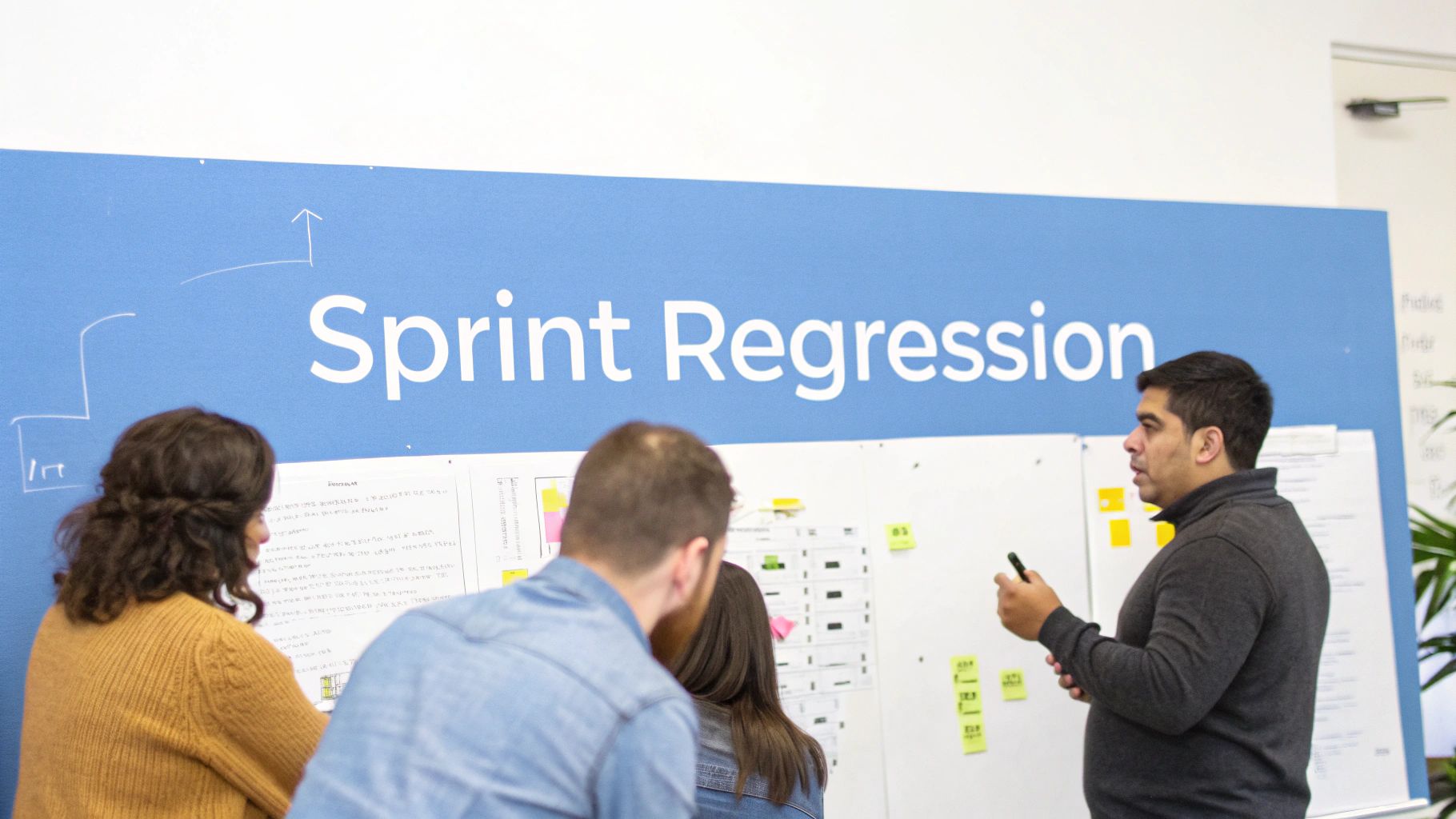
Achieving the right mix of manual and automated regression tests within an agile framework is essential for efficient and effective quality assurance. While full automation can seem attractive, it’s not always the most practical or budget-friendly option. Successful teams recognize the power of a combined approach, using the strengths of both manual and automated testing methods.
Identifying Candidates for Automation
Choosing which regression tests to automate shouldn’t be a random decision. Consider factors like test complexity, how often the test is run (execution frequency), and how stable the requirements are (stability of requirements). Tests that are simple, run often, and verify consistent requirements are perfect for automation.
For instance, the login process for an application is a simple, frequent operation, making it ideal for automation. On the other hand, evaluating the user experience of a new feature, which involves subjective feedback, is better suited for manual testing.
The Gradual Transition to Automation
Effective Agile teams avoid trying to automate their entire regression suite at once. They take a phased approach, starting with the simplest and most frequently run tests. As they become more comfortable and proficient with automated tests, they move on to more complex scenarios.
This incremental method minimizes disruption and allows teams to refine their automation strategy. It also frees up manual testers to concentrate on exploratory testing and finding edge cases, tasks where human intuition is invaluable.
The Hidden Costs of Automation
Automation provides substantial benefits, but it’s crucial to recognize the associated costs. Creating and maintaining automated tests demands time, resources, and specialized expertise. As applications evolve, automated tests require updates, increasing the maintenance workload. Many automation proponents overlook these ongoing maintenance costs, resulting in inaccurate ROI projections.
Building a Blended Regression Suite
The best regression suites blend the reliability of automation with the flexibility of manual testing. Automated tests offer a safety net, quickly catching frequent regressions. Manual testing enables exploration, uncovering unexpected issues and providing valuable insights on usability and user experience.
By incorporating both approaches, Agile teams create a comprehensive regression testing strategy that facilitates rapid development without sacrificing quality. This balanced approach ensures that both predictable and unforeseen bugs are addressed, resulting in a better product and greater customer satisfaction. This balance is fundamental to successful Agile development.
Regression testing, while vital, can sometimes feel like a bottleneck in Agile, due to its time-consuming nature. Manual regression testing, in particular, can seem repetitive and slow down sprint cycles. However, by finding the right mix of automated and manual testing, teams can overcome these hurdles. Learn more about this with this resource on Agile Regression Testing.
Smart Selection: Running the Right Tests Every Time

Testing every single element in an Agile environment is simply not practical. Rather than striving for complete test coverage, high-performing teams emphasize smart selection. This means picking out the most relevant regression tests for each development cycle.
This focused approach helps ensure quality without impacting development speed.
Risk-Based Testing: Focusing on What Matters Most
A valuable strategy for smart selection is risk-based testing. This involves evaluating the potential consequences of code modifications and prioritizing tests accordingly.
For instance, alterations to fundamental features or sections of the codebase with a history of bugs should undergo more rigorous testing. Less critical areas can be tested less extensively.
Analyzing Code Changes and Business Impact
Top-performing teams meticulously examine code changes to pinpoint which parts of the application are affected. This focused approach minimizes the number of required regression tests, conserving valuable time and resources.
Prioritizing tests based on business impact ensures that the most essential functions are thoroughly validated.
Real-World Example: Banking Application Login
Consider a banking application. A modification to the login system presents a significantly higher risk than a small update to the FAQ page. Therefore, regression tests for the login system should take precedence.
This core principle of risk-based testing—concentrating on areas with the highest potential impact—applies to any software project.
Building Institutional Knowledge to Identify Weak Points
Teams should document which parts of the application are most susceptible to defects over time. This collective knowledge, often referred to as institutional knowledge, guides future test selection, enabling teams to focus their testing efforts more efficiently.
This proactive method helps identify and address regressions before they escalate into significant problems.
Data-Driven Improvement of Test Selection
Teams shouldn’t rely solely on intuition for choosing regression tests. Data on test performance, such as pass/fail rates and the rate at which defects are found, can provide valuable insights.
This data-driven methodology allows for continual refinement of the test selection process, fostering ongoing improvement. For example, tests that consistently fail to uncover defects might be revised or eliminated.
Prioritizing Regression Test Cases
Effective prioritization is essential for agile regression testing. Here’s a simple framework to categorize tests based on their impact:
- Priority 1 (Sanity Tests): These tests confirm core functionality, such as login processes, essential navigation, and key user flows. They are vital for validating basic operability before more extensive testing.
- Priority 2 (Critical Non-Core Features): These tests cover important but not essential features. In an e-commerce application, for example, features like adding items to a shopping cart or applying discounts fall into this category.
- Priority 3 (Lower Impact Features): These tests address features that enhance the application but aren’t central to its main function, such as cosmetic updates or less frequently used options.
Using this framework ensures that the most critical functionalities are always tested first, even with limited resources. This prioritization strategy maximizes the effectiveness of regression testing within agile development.
Seamless Integration: Regression Tests in Your CI/CD Pipeline

Integrating regression tests into your Continuous Integration/Continuous Delivery (CI/CD) pipeline is essential for Agile teams. It transforms regression testing from a potential roadblock into a valuable tool, accelerating feedback and releases. This section explores how effective teams seamlessly integrate regression tests into their development processes.
Creating Responsive Systems Based on Change Impact
Modern CI/CD pipelines don’t just repeatedly execute the same regression tests. They adapt the testing scope based on the impact of code modifications. This dynamic strategy ensures that testing efforts are concentrated where they matter most.
For example, a small change to a rarely used feature might trigger a smaller set of regression tests than a significant update to core functionality. This focused approach reduces testing time without compromising quality.
Additionally, parallelizing test execution significantly speeds up feedback cycles. Running tests concurrently across multiple environments or devices offers quick insights into the impact of code changes. This rapid feedback is essential for Agile teams, allowing them to address problems swiftly and maintain momentum.
Presenting Actionable Test Results
Presenting test results effectively is as important as the tests themselves. CI/CD pipelines should deliver clear, concise reports that identify failures and enable quick action. This involves going beyond basic pass/fail notifications.
Pipelines should offer detailed logs, screenshots, and other diagnostic data. These comprehensive reports allow developers to understand the root cause of issues and implement appropriate solutions quickly. This immediate feedback loop promotes a culture of quality, encouraging developers to write more reliable code from the start.
The following table provides a comparison of some popular CI/CD tools and their regression testing capabilities for Agile teams:
CI/CD Tools for Regression Testing in Agile
| Tool | Regression Testing Features | Integration Capabilities | Best Suited For |
|---|---|---|---|
| Jenkins | Supports various testing frameworks, automated test execution, and reporting. | Integrates with a wide range of testing tools and platforms. | Teams seeking a highly customizable and extensible CI/CD solution. |
| GitLab CI/CD | Built-in test runners, parallel execution, and test reporting. | Tightly integrated with GitLab’s source code management and issue tracking features. | Teams using GitLab for source code management. |
| GitHub Actions | Automated workflows for testing, including matrix builds for different environments. | Integrates with GitHub’s repository and collaboration features. | Teams using GitHub for source code management. |
| CircleCI | Parallel test execution, test splitting, and insights dashboards. | Supports various testing frameworks and deployment platforms. | Teams looking for a cloud-based CI/CD solution with robust testing capabilities. |
This table highlights key features and integration capabilities to consider when selecting a CI/CD tool for regression testing. Choosing the right tool depends on your specific project needs and existing toolchain.
Addressing Common CI/CD Integration Challenges
Integrating regression tests into a CI/CD pipeline presents certain challenges. One common obstacle is test data management. Consistent and reliable test data is crucial for accurate results. Effective test data management strategies involve creating dedicated test databases, using data masking techniques, and implementing automated data provisioning processes.
Another critical aspect is environment consistency. Tests should be run in environments that closely resemble production. This requires careful configuration management and automated environment provisioning. Finally, flaky tests (tests that yield inconsistent results without code changes) can undermine confidence in the entire testing process. Identifying and resolving flaky tests through improved test design and robust automation is crucial for a reliable CI/CD pipeline. For further reading on performance testing: How to master performance testing.
By implementing these strategies, teams can build a CI/CD pipeline where regression testing becomes a driver of both quality and speed. This integration elevates regression testing in agile from a required task to a valuable asset.
Overcoming the Real Regression Testing Roadblocks
Regression testing in Agile is essential, yet it often presents significant challenges. These hurdles can be a source of frustration for even the most organized teams. This section delves into these common issues and offers practical solutions based on real-world experiences from testing professionals.
Unstable Test Environments: The Shifting Sands
One of the biggest obstacles is unstable test environments. It’s like trying to build on shifting sand; the foundation constantly changes, making construction a nightmare. Similarly, an unstable test environment makes results unreliable and wastes valuable time troubleshooting problems unrelated to the code itself.
- Solution: Establish robust environment management procedures. This includes adopting containerization technologies like Docker or Kubernetes to create consistent environments. Automating environment setup and teardown is also key, along with implementing strict version control for your environment configurations.
Constantly Changing Requirements: Hitting a Moving Target
Agile methodologies thrive on adaptability, but constantly evolving requirements can make regression testing feel like aiming at a moving target. Tests designed for one set of requirements quickly become outdated, creating gaps in test coverage and increasing risk.
- Solution: Adopt living documentation practices, where requirements and test cases are directly connected and updated in tandem. Leverage collaborative tools to track requirement changes and ensure seamless communication between testers and developers.
Data Dependencies: The Tangled Web
Many tests rely on specific data, and managing this data can be a major headache. Data dependencies often create bottlenecks and lead to inconsistencies between test runs, making it harder to pinpoint the root cause of test failures. It’s like untangling a complicated web; you need to carefully separate each thread to understand the bigger picture.
- Solution: Implement solid test data management strategies. This involves creating dedicated test databases, employing data masking techniques to safeguard sensitive information, and automating data setup and cleanup procedures.
Balancing Thoroughness with Speed: The Agile Dilemma
Thorough regression testing takes time, but Agile demands rapid delivery. This creates a constant tug-of-war between the desire for comprehensive test coverage and the need for rapid feedback loops. Finding the right balance is essential for successful Agile regression testing.
- Solution: Implement risk-based testing, where tests are prioritized according to the probability and impact of potential failures. Focus your efforts on areas of high risk, critical features, and recently modified components.
Advocating for Testing Time: Making the Case
In the race to release new features, testing time can often be compressed. Testers frequently need to champion adequate testing time during sprint planning. Showcasing the business value of regression testing is paramount.
- Solution: Gather concrete data on the cost of bugs in production and the time saved by identifying regressions early on. Communicate these results clearly to stakeholders, underscoring how thorough testing contributes to quicker releases with improved quality.
Managing Stakeholder Expectations: Setting Realistic Goals
Stakeholders sometimes expect flawless software delivered instantly. Managing these expectations realistically is vital for a positive and productive Agile environment. Transparency about the boundaries of regression testing is crucial. While it greatly improves software quality, it doesn’t guarantee a complete absence of bugs.
- Solution: Clearly communicate the scope and limitations of regression testing. Set attainable goals for test coverage and bug detection. Share test results and updates with stakeholders regularly to ensure transparency and cultivate trust.
By implementing these strategies, Agile teams can overcome typical regression testing obstacles and transform what can often be a frustrating exercise into a genuine competitive edge. Seeking a robust tool to streamline your regression testing? Explore GoReplay, an open-source tool designed to capture and replay live HTTP traffic into your testing environment. Using actual production traffic, GoReplay facilitates comprehensive and realistic regression testing, enabling you to identify critical issues before they impact users.